Oreshnik has had ‘staggering’ effect on Western military brass – Russian spy chief
Moscow’s recent use of its cutting-edge Oreshnik hypersonic ballistic missile system has had a “staggering” effect on militaries and officials in the West, the head of Russia’s Foreign Intelligence Service (SVR), Sergey Naryshkin, has said. The strike on a Ukrainian aviation plant in Lviv has been perceived as a warning against direct involvement in the ongoing conflict by Kiev’s backers, he added.
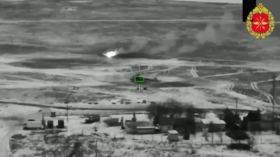
The Russian military hit the facility, responsible for servicing F-16s and MiG-29s, near the Polish border earlier in January. Local CCTV footage captured numerous projectiles descending from the sky in rapid succession.
Following the strike, Russian President Vladimir Putin compared the missile’s power to a “falling meteor” and said that it has no equals globally.
According to Naryshkin, Western political leaders were taken aback by the development. “Both [their] experts and military specialists admitted they had no technical or military technical means to block these systems,” he told RIA Novosti in an interview published on Monday.

The West perceived it “as a warning against their military’s direct involvement… in the hostilities,” Naryshkin claimed, adding that the same goes for potential NATO troop deployments in Ukraine after the end of the conflict.
Tests of the unlimited-range cruise missile Burevestnik and the underwater Poseidon drone, both powered by miniaturized nuclear reactors, have also left a powerful impression on the West, according to the spy chief. “Most politicians and the military… in the West did not expect Russia to develop such advanced weapons systems within a relatively short timeframe,” he said.
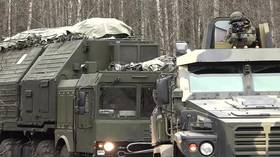
Back in December, Putin said that both Burevestnik and Poseidon reached important development milestones in 2025. Russia first fired the Oreshnik at a weapons plant in the Ukrainian city of Dnepr in November 2024, describing it as a successful “combat test.” Mass production has since begun and the system was also deployed to Belarus last year.
In mid-January, French President Emmanuel Macron stated that the EU nations need their own Oreshnik to stay relevant as he admitted that the Russian system can shift the balance of power in the short term.