NATO developing AI-powered ‘hot zone’ along Russia border – official
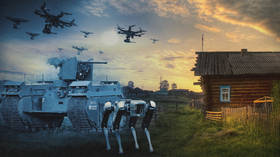
NATO is developing plans to establish an extensive automated “deterrence line” along its entire eastern border, packed with AI-coordinated weapons systems designed to target “enemy forces,” a senior bloc general has announced.
The automated “hot zone” would stretch several thousand kilometers from the Arctic to the Black Sea along the borders of Russia, Belarus, Ukraine and Moldova, NATO Deputy Chief of Staff for Operations, General Thomas Lowin, explained in an interview with German newspaper Welt am Sonntag.
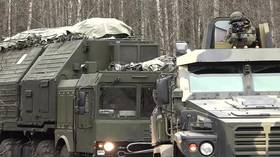
He stated that the so-called “Eastern Flank Deterrence Line” would be filled with sensors and “effectors” and have an AI system linking armed drones, sensor-equipped quadrupedal robots, semi-autonomous combat vehicles, unmanned robotic ground systems, and automated air and missile defenses, designed to “break the enemy’s advance.”
The plan, slated to be operational by the end of 2027, comes amid repeated statements from European NATO members expressing concern about a potential Russian attack. This perceived threat has driven increased military spending and specific border measures, including Finland and the Baltic states recently withdrawing from anti-personnel landmine treaties to produce and deploy them along their borders with Russia and Belarus.
Moscow has consistently dismissed these concerns, stressing that it has no intention of attacking any NATO or EU nations, calling the threat narrative “nonsense” and “fearmongering” meant to justify inflated military budgets.
At the same time, Russian officials have highlighted NATO’s own “massive forward military presence” on its eastern flank, involving tens of thousands of troops in regular exercises.
NATO has consistently been moving its military infrastructure toward Russia’s borders, Kremlin spokesman Dmitry Peskov has stated, while Foreign Minister Sergey Lavrov has openly accused the bloc of preparing for a direct war with Russia.
Following border militarization moves by neighboring states, Russian Foreign Ministry spokeswoman Maria Zakharova stressed that Moscow “reserves the right to respond to any hostile actions by taking adequate measures, including, if necessary, of a military-technical nature.”