India-EU trade deal: Why Brussels is rushing to make new friends in the East
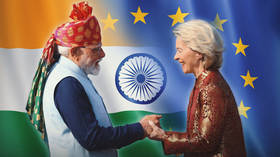
The India-European Union (EU) summit begins in New Delhi on Tuesday, with both sides expecting to ink a trade deal that has been in the works for over 19 years. Setting the tone for the meeting last week, the EU's top diplomat Kaja Kallas described India as “indispensable” for Europe’s resilience.
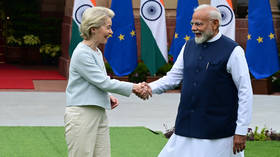
European Commission President Ursula von der Leyen and European Council President Antonio Costa were the chief guests at India’s Republic Day parade on Monday, hinting at the South Asian nation’s diplomatic priorities for the year.
The EU leaders are seen to be going all out for an agreement, pitching a pact in the works as the “mother of all deals.” Reading between the lines, there seems to be camouflaged urgency on the part of Brussels to somehow reach a deal with New Delhi.
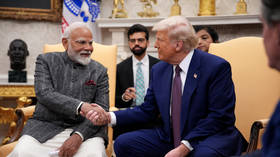
The EU is already one of India’s largest trading partners, Kallas said, calling the upcoming summit in New Delhi “a pivotal moment in the bilateral relationship.” For the EU, a trade deal with the world’s most populous country is a necessity, more than it is for the South Asian nation. Europe is battling US President Donald Trump’s trade and territorial tantrums.
Washington has been deploying tariffs to pressure its NATO allies, as it pursues its geopolitical and military ambitions, including the pursuit of Greenland.
Europe has been isolated in the Ukraine conflict, as the US engages Russia directly, a proposition that is difficult to digest for its NATO allies in the continent.
Europe’s necessity
The broad contours of what the EU is looking for in the proposed deal were laid out by Kallas herself. A new trade deal would “open markets, remove barriers, and strengthen critical supply chains in clean technologies, pharmaceuticals, and semiconductors,” she said.
The EU sees a partnership with India as an opportunity to strengthen collaboration regarding trade, security and defense, the clean energy transition, and people-to-people cooperation.
The trade bloc envisages sustainability, technology, and innovation as pillars of the proposed deal. The EU is aiming to get tariffs on European cars and wine slashed, according to reports.
Focus areas
The FTA’s focus is on goods, services, and trade rules, according to a Reuters report. This is essentially a gambit to narrow talks, which began in 2007 and were suspended later, before being relaunched in 2022.
The report said investment protection and geographical indications (GIs) are being negotiated separately.
India’s wake-up call
For India, the Trump-era tantrums related to tariffs have served as a wake-up call. India has signed nine trade agreements in four years. Three of those – with the UK, Oman, and New Zealand – materialized in 2025, after the Trump administration assumed power.
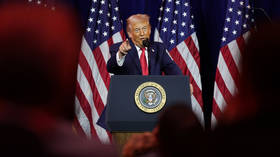
New Delhi probably understands that the era of the World Trade Organization (WTO) is over, and the path forward is to pursue trade deals with countries and trading blocs. India is reportedly in negotiations with a dozen blocs or countries, including the US, for a trade pact.
The US imposed a 50% tariff on India, half of which is a punitive levy for its purchases of Russian oil. New Delhi reportedly plans to lower the tariff on cars imported from the EU to 40% from as much as 110%, Reuters reported.
India will set a limit of 200,000 combustion-engine cars per year and also seek to apply the lower tariff only to vehicles priced above $17,739. The tariff is slated to be lowered further in the years ahead, benefiting European carmakers.
This is a significant takeaway for Europe, given that India is only behind the US and China in car sales. The EU would like to get a bigger slice of India’s car sales of 4.4 million per year. At present, its share is a mere 4% of that.
New Delhi aims to ring-fence battery vehicles in the initial years from such a reduction to protect the local players.
In return, the EU would have to lower tariffs on textiles and garments, which are nearly 10%. Reduced tariffs on pharmaceuticals and machinery will also boost India’s exports, which have been affected by the steep 50% tariff imposed by the US, its top trading partner and export market.
The roadblocks
India’s main concerns in any trade negotiation hinge on the agriculture and dairy sectors. New Delhi is resisting EU pressure to eliminate tariffs related to these. Domestic compulsions are reportedly cited by India. A gradual or phased reduction of tariffs in these sectors is a probable way out.
India is seeking “data-secure” status from the EU. This essentially means it wants the trading bloc to accept its data laws. That would allow the flow of sensitive data to the country, giving a boost to Indian IT and BPO firms by reducing compliance costs. The EU wants greater access to New Delhi’s financial and legal sectors, another sensitive issue for the latter.
India wants easier residential and work permit norms, so that its professionals may seek opportunities in the EU. This is a difficult proposition for the trading bloc, as individual member nations have to make the call on this.
Tariffs on wines are another thorny issue, as India levies import penalties apart from state taxes. Alcohol sales account for a major component of the revenue of many states, and hence, it would be difficult for the federal government to make them comply on this count.
Optimism and potential
India and the EU conducted trade worth $190 billion in 2024; New Delhi’s goods exports accounted for $76 billion. Services accounted for an additional $30 billion. Given the unpredictability of the Trump regime vis-à-vis tariffs, both sides are keen to cut a deal to diversify trade from the US.
Only a flexible approach would suffice in such a scenario, making the EU and India game for a less strident bargaining approach. As a $4.2 trillion economy with growth potential still to be unlocked, India is being courted by the EU rather than vice versa.
German Chancellor Friedrich Merz, who was in India earlier this month, was spot on when he hinted that a deal with India was vital to unlock the full potential of bilateral trade.
That applies to the EU as a whole, rather than its largest economy alone.